Samar Mart
An online store for mobile gadgets and accessories with brand browsing, EMI options, wishlist, cart and a dark-mode toggle.
Visit live site (opens Samar Mart in a new tab)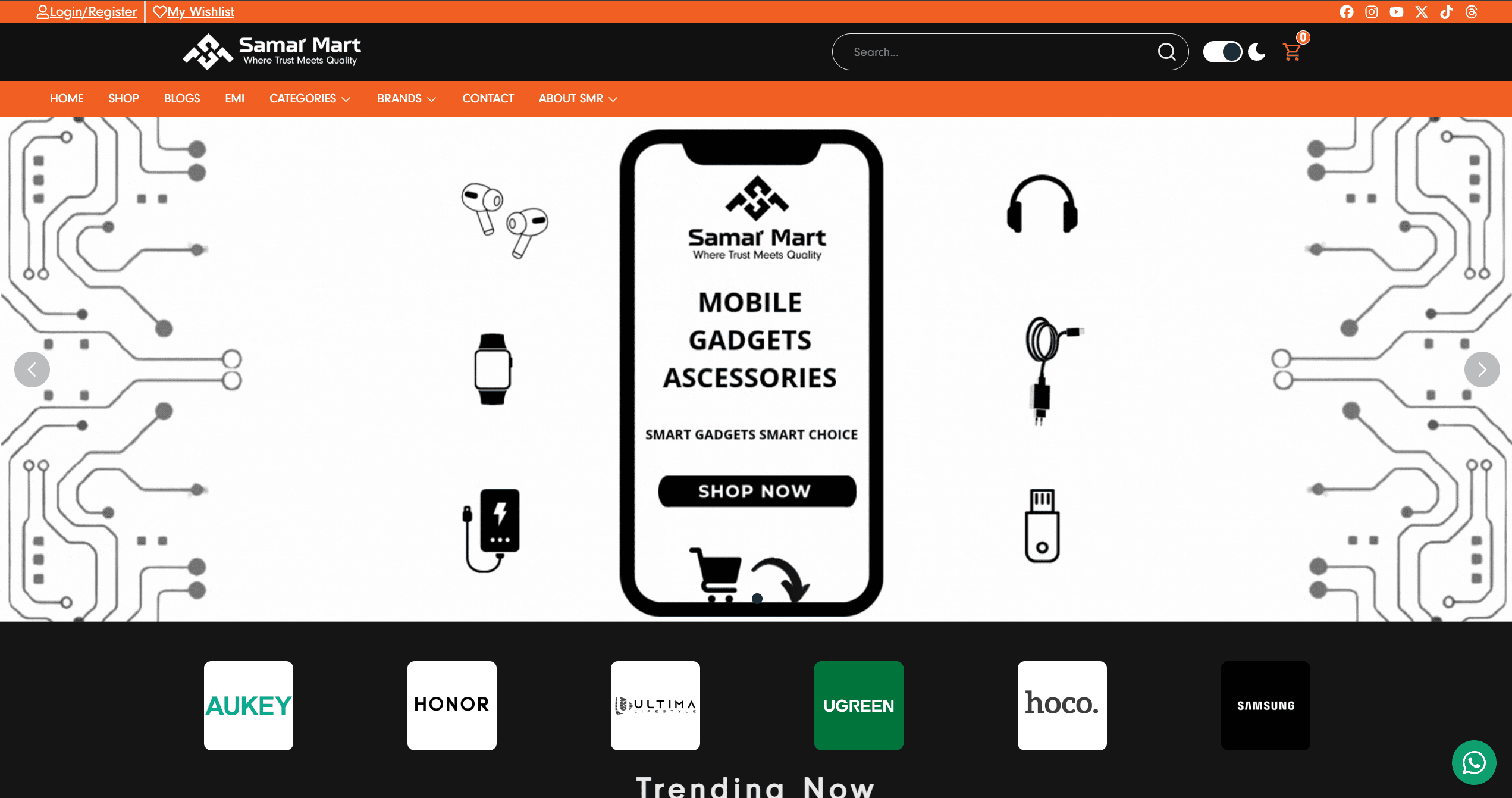
- Freelance Full-Stack Developer
Overview
Samar Mart is an online store for mobile gadgets and accessories, with a brand strip that includes AUKEY, HONOR, ULTIMA, UGREEN, hoco and Samsung. Shoppers browse by category or brand, search, save items to a wishlist, add products to the cart, check EMI options and follow their order through to delivery.
For two years (August 2024 to July 2026) I developed and maintained the platform as a freelance full-stack developer, with a Next.js storefront on top of a Laravel API.
The brief
A gadgets marketplace has to do several things well at once:
- Present a large, changing catalogue so shoppers can find a product quickly.
- Support promotions, flash-style offers and brand pages without a redeploy for every change.
- Make the cart and checkout flow friction-free on mobile, where most shoppers arrive.
- Keep customers informed after they order.
- Stay stable while new features ship, because every bug costs real sales.
What I built
Product listings and discovery. Category and brand menus, search, and a "trending now" rail help shoppers move from a vague idea to a specific product. Brand tiles in the page footer and header make popular manufacturers one click away.
Cart flows. Add to cart, adjust quantities and review totals before checkout, with the cart count kept in sync across the header and every page.
Real-time order tracking. After ordering, customers can follow the status of their order without having to contact the store.
Wishlist and accounts. Shoppers can save products for later and sign in or register from the top bar.
Finance and convenience. EMI information is surfaced in the main navigation so higher-priced devices are within reach, and a light and dark theme toggle sits in the header.
An API-first back end. The Laravel API serves products, orders and customers to the storefront, which keeps business rules in one place and makes it possible to add other clients (such as an app) later.
Ongoing work
Maintaining a live store for two years is a different discipline from launching one. My work covered:
- Feature updates as the catalogue, categories, brands and promotions grew.
- Bug fixes and regressions, diagnosed and fixed quickly without disturbing live orders.
- Responsive improvements, so the store works as well on a phone as on a desktop.
What to look for on the live site
- The orange and black header with the search bar, dark-mode toggle and cart counter.
- The brand strip beneath the hero banner.
- The "Trending Now" section and how categories and brands are organised in the menus.
- The way promotions are presented in the hero banners.
What I took from it
Two years on one product teaches what a launch cannot: how to change a live system safely, how to make small, reversible changes, and why boring reliability is the feature customers notice most.